

Amicus Policy Success in Impactful Supreme Court Decisions
Written by
Dr. Adam Feldman Published: 19 February 2018
Gun Owners of America leads the way for Second Amendment Organizations
Perhaps the biggest development in the modern Supreme Court alongside the great discretion the justices now have in dictating the cases they hear is the role of interest groups. Over the past several decades the Supreme Court has increasingly become the forum for such groups and their attempts at persuasion; the object of persuasion being the amicus brief.
Although groups filing amicus briefs do not always know ex-ante that the Court will shift policy with a decision, certain cases portend such outcomes more acutely than others. Cases that lead the Court to rule statutes unconstitutional or to overturn its own precedent tend to have significant policy effects and the Court is often directed to such aspects of cases in early phases of litigation. This post looks at the cases that led to such changes and at the groups most involved in them.
According to the United States Supreme Court Database, the Court has ruled a statute unconstitutional and/or has overturned its own precedent in 87 cases since the 2000 term. Approximately 836 merits stage amicus briefs were filed in this set of cases or just under 10 briefs per case on average. Several groups were clearly dominant in filing briefs on behalf of winning sides in these cases and consequently in moving policy in their preferred directions. Before getting to the groups though – a look at the issues at stake in the cases and the cases’ origins….
Groups
Certain groups have been particularly dominant in cases dealing with significant policy implications. The issues dealt with in this set of cases foreshadow the most successful groups as they appear in the figure below.
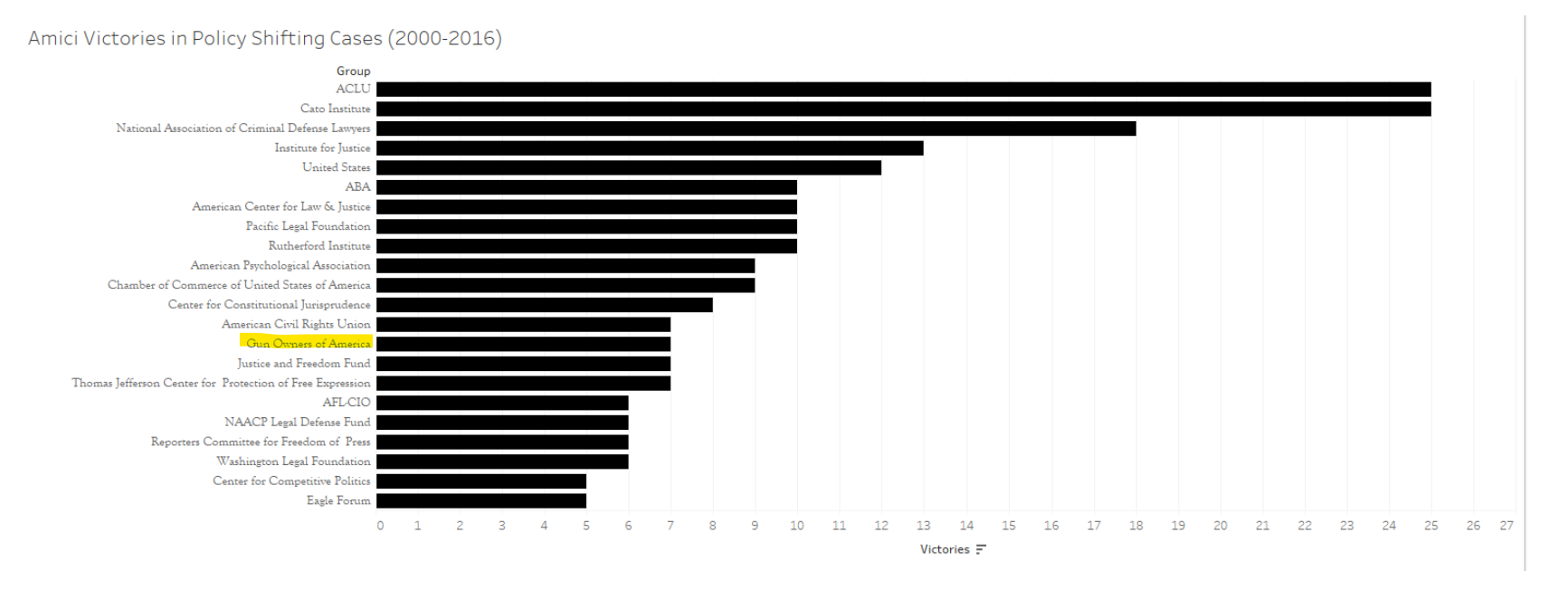
Clearly groups dealing with individual rights lead the way.
Read more of this article at Empirical SCOTUS.